
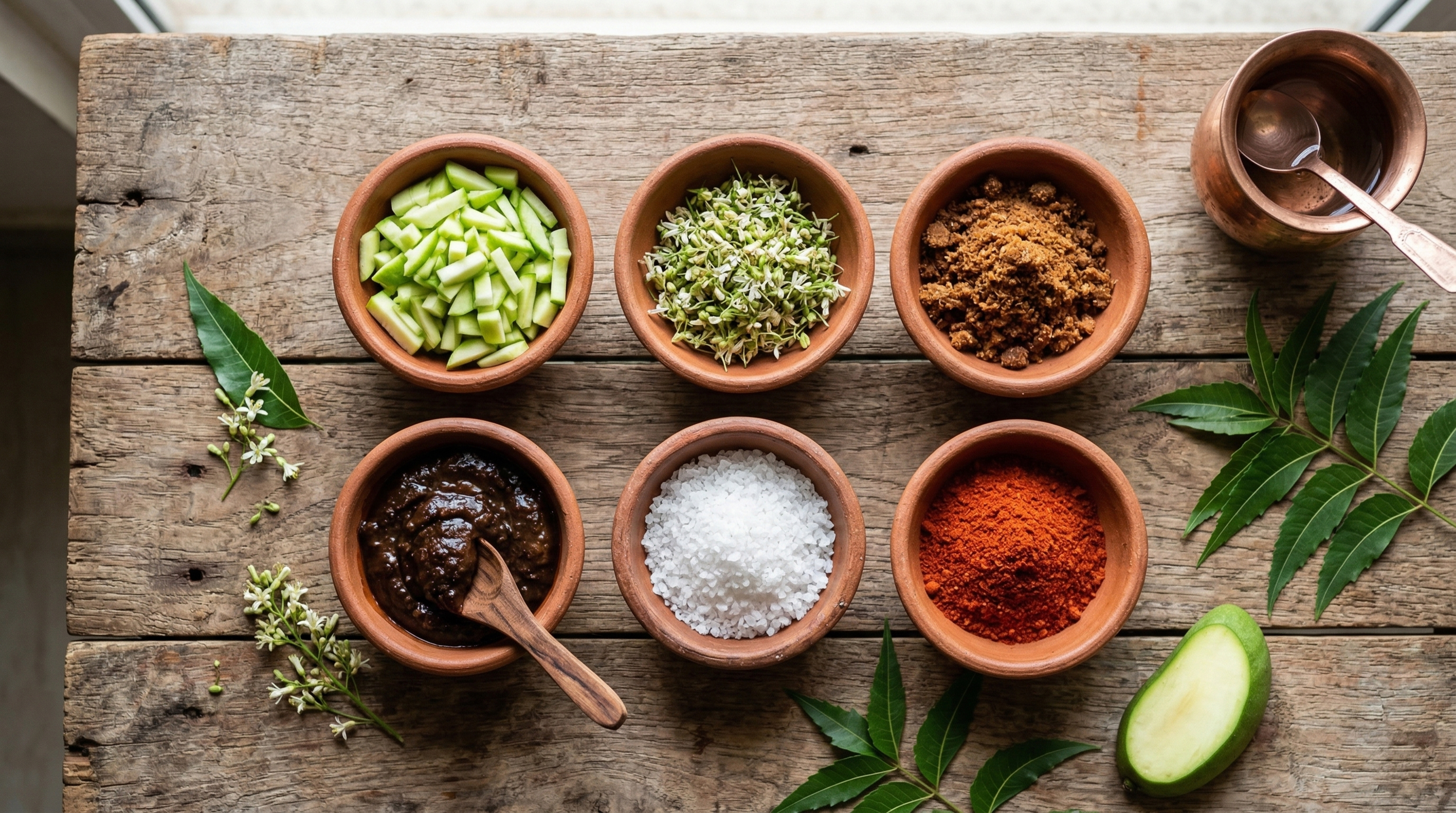
Ayurveda teaches that food is medicine, but not all food works the same way for every body. The Shad Rasa framework reveals how flavor itself shapes digestion, organ health, and emotional balance.
1. Sweet - Earth + Water
Primary organs: Thyroid, upper lungs
Sweet is the most nourishing and building taste. It increases bulk and substance in the body, making it essential for growth, hydration, and tissue repair. However, "sweet" in Ayurveda is not limited to sugar it refers to anything with an inherently nourishing, building quality.
Foods: Fruits, coconut, soaked almonds, cashews, rice, wheat, oats, most oils, dates, maple syrup, honey
Note on nuts: Soaking nuts before eating them neutralizes enzyme inhibitors and makes them far easier to digest. Soaked and peeled almonds in particular are considered beneficial for all three doshas.
Note on honey: Unlike refined sugar, honey is considered less addictive and metabolically cleaner — but it should never be heated, as Ayurveda considers heated honey toxic to the system.
In balance: Deep nourishment, hydration, softness, contentment, tissue building
Out of balance: Constant neediness, over-attachment, excess weight, congestion, sluggishness the emotional and physical experience of never feeling satisfied
2. Bitter - Air + Space
Primary organs: Liver, spleen, pancreas
Bitter is the great cleanser. It works by creating separation - pulling toxins from tissues, scraping fat, purifying the blood, and clearing the cardiovascular system. It is naturally antibacterial and antiparasitic, and it kindles Agni, the digestive fire. Of all six tastes, bitter is the most detoxifying.
Foods: Dandelion, kale, frisée, radicchio, bitter melon, bitter gourd, turmeric, cumin, fenugreek, gymnema (gormar)
Gymnema (gormar) deserves special mention: it is known to neutralize the sensation of sweetness on the palate, effectively reducing sugar cravings and helping break the cycle of sugar dependence. It literally kills the temptation.
In balance: Blood purification, cardiovascular cleansing, fat reduction, reduced parasites, cooling of excess heat, enhanced discipline and mental clarity
Out of balance: Excess dryness, depletion of tissues, emaciation, bitter consumed in excess separates too aggressively, leaving the body without enough substance to hold itself together
3. Salty - Fire + Water
Primary organs: Kidneys, adrenal glands
Salt governs the fluid intelligence of the body. It maintains osmotic balance the delicate equilibrium between water inside and outside cells and supports the adrenal glands, which regulate stress response and electrolyte balance. Not all salts are equal; Ayurveda favors mineral-rich, unrefined salts that carry trace elements the body recognizes and uses.
Foods: Sea salt, rock salt, Himalayan pink salt, Celtic gray salt, Redmond Real Salt, seaweed, kelp, nori, miso, tamari, ocean fish, celery, gomasio (sesame with seaweed and salt)
In balance: Proper fluid regulation, adrenal support, grounding, enhancement of other flavors, mineral replenishment
Out of balance: Water retention and swelling, high blood pressure, excessive thirst, and at the emotional level — hedonism and addictive tendencies, a craving for more stimulation that is never quite satisfied
4. Sour - Fire + Earth
Primary organs: Lungs
Sour is the great awakener of digestion. It stimulates digestive secretions, sharpens the senses, and brings the system online after rest or sluggishness. Ayurveda offers a simple and elegant electrolyte drink water with lime juice, maple syrup, and a pinch of salt, sometimes called Ayurvedic Gatorade for its ability to rehydrate and replenish without taxing the system.
Note: Honey is not used in this preparation because it heats the system and has a dehydrating effect — the opposite of what electrolyte replenishment requires.
Foods: Citrus fruits, vinegar, pickles, sauerkraut, fermented foods, yogurt, buttermilk, sour cream, aged foods
In balance: Stimulation of digestive secretions, awakening of appetite and senses, mental sharpness and wit, lung support
Out of balance: Itchy or rashy skin, dry mucous membranes, irritability, excessive criticism — the mental sharpness of sour curdles into agitation when taken to excess
5. Pungent - Fire + Air
Primary organs: Circulatory system, sinuses
Pungent is the most heating and mobilizing of all tastes. It stokes digestive fire, clears congestion, accelerates metabolism, and moves stagnant energy. It is the taste of passion and vitality but it must be used with care, particularly by those with inflammatory conditions, fever, or excess heat in the body.
Foods: Chili, mustard, black pepper, radish, onion, ginger
A particularly effective Ayurvedic digestive practice: a small piece of fresh ginger with lemon juice and a pinch of salt taken before or after a meal. This pickle-style preparation activates digestive fire and is especially useful when digestion feels sluggish or heavy.
In balance: Strong digestive fire, clear metabolism, robust immunity, healthy circulation, passion and physical energy
Out of balance: Blood thinning, burning sensations throughout the body, irritability, anger, aggression and physically, conditions like nosebleeds, inflammation, and fever are worsened by excess pungency, as it keeps the blood running hot
6. Astringent - Air + Earth
Primary organs: Colon, connective tissue
Though not always listed first, astringent is the sixth and completing taste. It is drying, firming, and contracting — the opposite of sour's stimulating flow. It tones tissues, tightens mucous membranes, and helps the body consolidate after the work of digestion. It is the taste of beans, lentils, pomegranate, turmeric, and unripe fruits.
In balance: Tissue toning, absorption support, reduced excess moisture and fat, grounding of Vata and Kapha
Out of balance: Dryness, constipation, constriction, anxiety, and a tendency toward rigidity emotionally and physically
Completeness is the goal, not perfection.
The Shad Rasa framework isn't a rigid prescription, it's an invitation to notice. When your body craves something salty late in the afternoon, that might be adrenal fatigue speaking. When bitter foods feel repulsive, your liver might be overtaxed. The six tastes become a language through which the body communicates its needs, if you know how to listen.
In Ayurveda, a meal that honors all six tastes is not just nutritionally complete, it is emotionally and energetically complete. Sweet for nourishment, bitter for clarity, salty for grounding, sour for awakening, pungent for vitality, and astringent for integration. Together, they form a full cycle, from building, to cleansing, to consolidating, mirroring the body's own rhythms.
Wondering if you're getting enough bitter and astringent in your daily meals? Kaya5's Taste Tracker helps you log meals and automatically maps the six tastes across your day, showing you what's missing before your body has to ask. Available on iOS and Android. -> Join our waitlist.