

A Simple Approach to Food, Digestion, and Everyday Nourishment
Eating well isn’t only about choosing healthy foods.
What you eat matters — but so do when you eat, how you eat, and how you feel afterward.
Yoga and Ayurveda invite us to look at the whole experience of eating: the food itself, the rhythm of meals, the way we approach them, and the signals our bodies give us afterward.
There is no need to begin with strict rules or complicated food charts. A few practical principles can make everyday eating more intentional and supportive.
Why Digestion Matters
Ayurveda calls digestive capacity Agni, often translated as digestive fire. In everyday terms, Agni refers to the body’s ability to digest and make use of food.
Ayurveda also recognizes that digestion is influenced by more than ingredients alone. Meal size, timing, daily habits, and individual constitution are part of the picture. Modern understanding adds factors such as stress, sleep, activity, medications, and health conditions.
Yoga approaches the subject from another direction. Through breath, movement, and attention, it helps us become more aware of physical sensations and shift out of a hurried state.
Ayurveda & Yoga
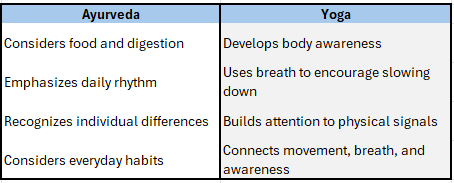
Together, they invite a broader question than “Is this food healthy?” Instead: How does this way of eating support me?
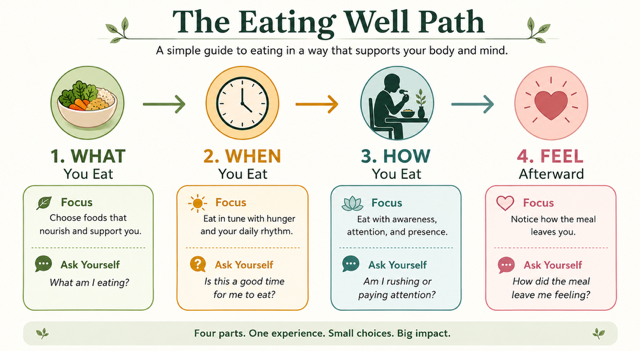
1. WHAT YOU EAT
Keep Food Practical
Ayurveda traditionally describes food through qualities such as warm or cool, light or heavy, and dry or moist.
You don’t need to memorize these qualities to begin applying the basic idea. Build meals around varied, nourishing foods while paying attention to what you digest comfortably.
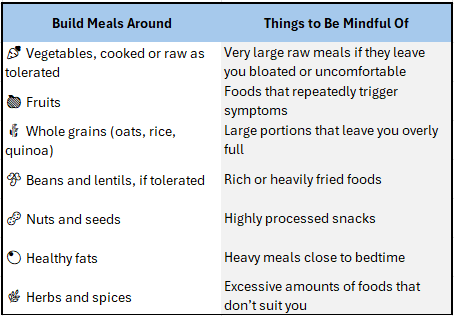
This is not a list of good foods and bad foods.
People respond differently. A raw salad may feel refreshing to one person and difficult to digest for another. Beans, dairy, spicy foods, and grains can also be experienced differently from person to person.
The practical goal is to combine nourishing foods with an understanding of how your body responds.
2. WHEN YOU EAT
Give Meals a Rhythm
Ayurveda has long emphasized the relationship between eating and the natural rhythm of the day.
That doesn’t mean everyone needs to eat at identical times. Work schedules, family routines, activity levels, health needs, and appetite all matter.
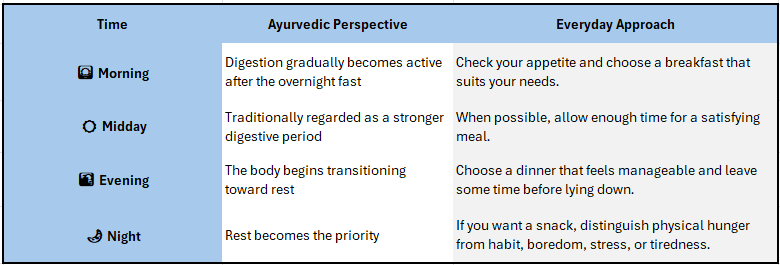
The important distinction is between rhythm and strictness. A gentle meal rhythm can offer structure without ignoring genuine hunger or the realities of everyday life.
3. HOW YOU EAT
The Meal Is More Than the Food
The same meal can be experienced very differently depending on how it is eaten.

Mindful eating doesn’t require silence, perfect concentration, or a special ritual.
It can be much more ordinary.
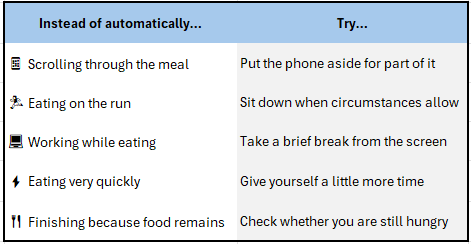
These are not rules for every meal. They are small ways to make eating less automatic and more attentive.
4. HOW YOU FEEL AFTERWARD
Let Your Response Provide Useful Information
What happens after a meal can tell you something that a nutrition label cannot: how that particular meal worked for you.
There is no need to analyze every sensation or track every bite. Look instead for experiences that occur consistently.
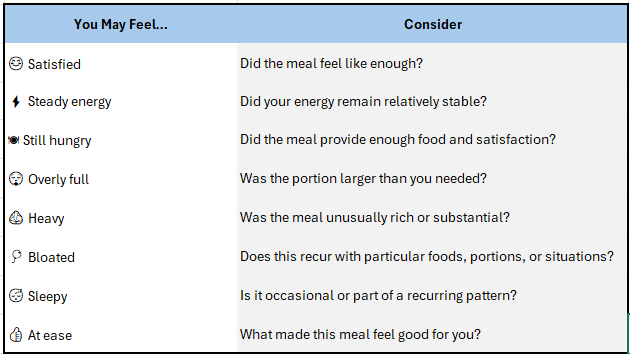
A single experience rarely tells the whole story.
Repeated patterns are more informative. If symptoms occur frequently, are severe, or are getting worse, they deserve appropriate medical evaluation rather than continued food experimentation.
Where Yoga Fits In
Yoga’s contribution to eating well is not about trying to “fix” digestion with a pose.
Its value lies in breath, gentle movement, and body awareness.

No special breathing technique is required, and every meal does not need a wellness routine attached to it.
For readers who want deeper support:
Yoga for Gut Health & Digestion (Click here) This guide explores yoga practices in more detail, allowing this pathway to remain focused on food and everyday eating habits.
Putting It Into Practice
Here is one example of how these ideas can fit into an ordinary day.
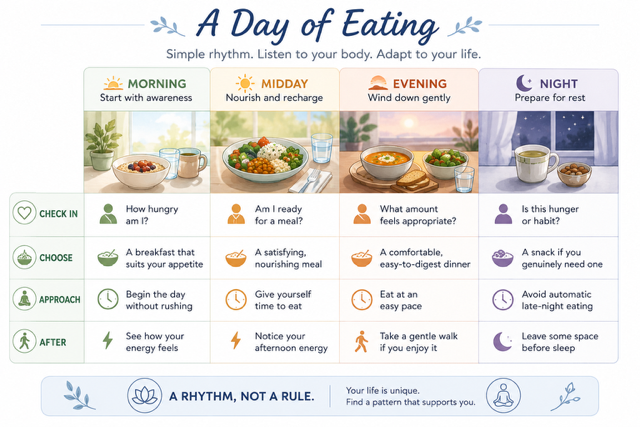
The purpose is not to reproduce this schedule exactly, but to see how food choices, timing, eating habits, and physical responses can work together.
When to Seek Medical Guidance
Digestive discomfort happens occasionally, but persistent or significant symptoms should not be managed through diet, yoga, or Ayurveda alone.
Seek medical guidance for concerns such as:
persistent or severe abdominal pain
blood in the stool or gastrointestinal bleeding
unexplained weight loss
ongoing vomiting
difficulty swallowing
significant or persistent changes in bowel habits
symptoms that continue, recur frequently, or worsen
Yoga and Ayurveda can complement everyday well‑being, but they do not replace appropriate medical diagnosis or treatment.
Eating Well Without Eating Perfectly
Eating well doesn’t require every meal to be homemade, perfectly timed, or completely distraction‑free. It is a practice of making thoughtful choices while remaining flexible enough for real life.
The framework is intentionally simple: 🥣 WHAT → 🕒 WHEN → 🌿 HOW → 💛 FEEL
Use it as a guide, not another set of rules. And when you aren’t sure what you need, begin with one question: What would support me right now?
🌸Continue Your Journey: Food changes with more than appetite and daily routine. Weather, temperature, daylight, activity, and the changing seasons can influence what we naturally reach for and how we care for ourselves.
Ayurveda has long viewed seasonal change as an invitation to adjust rather than follow the same routine all year.